Jump Rings for Jewelry Making
If you've ever tried to attach a charm to a bracelet with the wrong size ring, you already know why this stuff matters. Jump ring jewelry components are small, but they're the connective tissue of almost everything you make, and the wrong gauge or the wrong opening can undo hours of work.
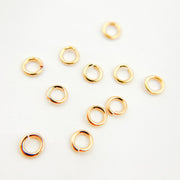
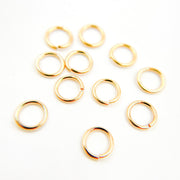
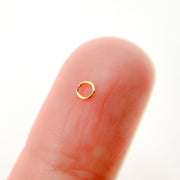
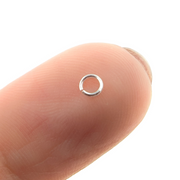
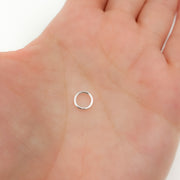
Every connection in a piece of jewelry has to hold, whether that's a charm swinging off a bracelet all day or a clasp taking on and off pressure hundreds of times. Jewelry jump rings from Jewels And Chains are cut precise and finished clean, in sterling silver, gold filled, and solid gold, from delicate 2mm sizes up to heavy duty stock rated for permanent jewelry work. Jump rings for jewelry making that actually hold their shape after opening, closing, and years of wear, that's the standard here, not the exception.
What Are Jump Rings?
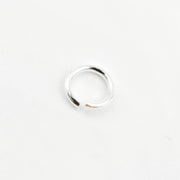
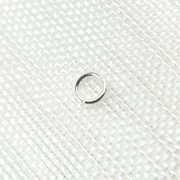
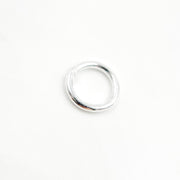
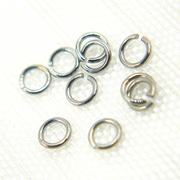
A jump ring is a small metal loop, usually round or triangular, used to connect two jewelry components together. Think chain to clasp, bracelet charm, pendant to necklace.
They're not glamorous. Most customers never even mention them by name when describing a finished piece. But jump rings jewelry makers rely on them for nearly every connection point in a design. A necklace clasp needs one. A charm bracelet might use a dozen. Chainmaille work can use hundreds in a single piece.
The purpose is simple: hold two things together securely, and if it's an open ring, let you get in there with pliers to make that connection yourself. That's the whole job. Get the size, gauge, and closure type right, and the ring disappears into the design. Get it wrong, and it's the first thing that fails.
Shop Premium Jump Rings
Not all jump rings are cut the same way, and honestly, that's where a lot of cheaper suppliers cut corners. We machine-cut ours for a clean, consistent seam, which matters more than people expect once you actually try to close one shut. A poorly cut ring leaves a gap no matter how careful you are with pliers.
Here's what you're getting across this collection:
- Precision-cut seams for a tight, near-invisible close
- Consistent inner diameter, batch to batch
- Polished finish with no burrs or sharp edges catching on skin or fabric
- Available in sizes from 2mm up to large-format rings for statement pieces
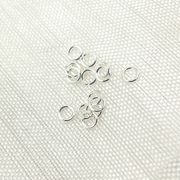
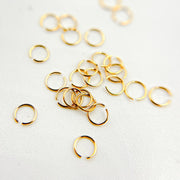
- Sterling silver, gold filled, and solid gold options, so the ring matches the rest of your build instead of standing out as the weak link
That last point matters more than people think. A gold filled ring on a solid gold chain will tarnish differently over time, and a mismatched finish is one of those small things that makes a piece look cheaper than it is.
Types of Jump Rings
There's more than one kind of jump ring, and picking the right one depends on what you're building and how much stress that connection point needs to handle.
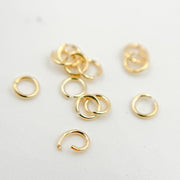
Open jump rings are cut once around the circumference, so you can pry them open with two pairs of pliers, thread on your component, and close them back up. These are the workhorses of jewelry making. Most everyday connections use these.
Closed jump rings are soldered or welded shut with no seam at all. You can't open them, which sounds limiting until you realize that's exactly the point. They're used where security matters more than flexibility, like the ring that connects directly to a clasp.
Locking jump rings function like a tiny padlock. They open, but instead of just squeezing shut, they thread or clamp closed with a mechanism that resists coming undone under normal wear. Popular for permanent jewelry and pieces that see daily use.
Triangle jump rings aren't round, they're triangular, and jewelers use them specifically because a wire or chain sitting inside a triangle ring naturally centers itself instead of sliding around the loop the way it would on a round ring.
Fancy jump rings cover decorative variations, twisted wire, hammered texture, faceted cuts, anything beyond a plain round profile. These get used as a design element, not just a connector.
Heavy duty jump rings are thicker gauge, built for weight-bearing connections like statement pendants or multi-strand designs where a standard gauge ring would eventually deform or open under load.
Permanent jewelry jump rings are a category of their own now, sized and gauged specifically for the welded, no-clasp bracelets and necklaces that have gotten popular over the last few years. These need to weld cleanly with a pulse arc welder, which not every ring is suited for.
Jump Ring Type Comparison
|
Type
|
Opens?
|
Best For
|
Strength
|
|
Open
|
Yes
|
General assembly, charms, everyday connections
|
Moderate
|
|
Closed
|
No
|
Clasp attachment points, permanent structural links
|
High
|
|
Locking
|
Yes, with mechanism
|
Permanent jewelry, daily-wear pieces
|
High
|
|
Triangle
|
Yes
|
Wire wrapping, chain centering
|
Moderate to High
|
|
Fancy
|
Varies
|
Decorative accents, focal points
|
Varies by design
|
|
Heavy Duty
|
Yes
|
Statement pendants, multi-strand loads
|
Very High
|
Available Sizes
Sizing confuses a lot of people new to this, so here's the short version: jump ring size is described two ways, the inner diameter (in mm) and the wire thickness (in gauge). Both matter, and they're not the same measurement.
-
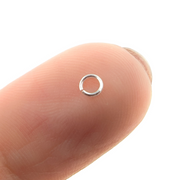
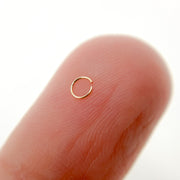
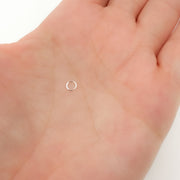
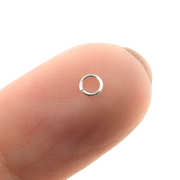
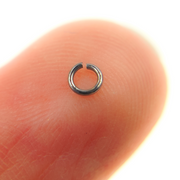
2mm jump rings are on the small end, typically used for delicate chain repair or fine jewelry where a bulky ring would look out of place
-
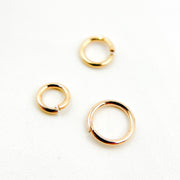
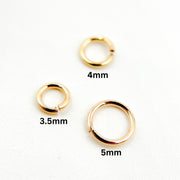
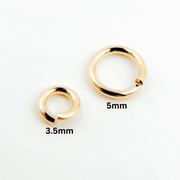
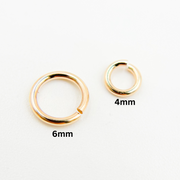
Small jump rings generally run from about 3mm to 5mm, good for earrings and lightweight charm work
-
Large jump rings start around 8mm and up, used for chunky chain-link styles or as standalone design elements
-
Thick jump rings refers to wire gauge, not diameter, and these are chosen for load-bearing spots regardless of how big or small the ring looks
-
20 gauge jump rings sit in a common middle ground, thick enough to hold shape under normal wear but still fine enough for detailed work
A rough rule of thumb: the heavier the piece hanging off the ring, the thicker the gauge you want, even if the diameter itself stays small.
Size and Gauge Quick Reference
|
Measurement
|
Typical Range
|
Common Use
|
|
Inner Diameter
|
2mm–12mm+
|
Determines what fits through the ring
|
|
Wire Gauge
|
24ga (thin) – 16ga (thick)
|
Determines strength and load capacity
|
|
Standard Everyday Use
|
4mm–6mm, 20ga
|
Charms, bracelet links, small pendants
|
|
Statement / Heavy Use
|
8mm+, 18ga or thicker
|
Multi-strand designs, heavier pendants
|
Materials Available
We stock jump rings in the metals jewelry makers actually ask for most:
-
Sterling silver jump rings for jewelry work, the standard choice for most silver-based pieces, tarnish-resistant with proper care and a good match for both fine and everyday design
-
Gold filled rings, a practical middle ground between solid gold and gold-plated, with a much thicker layer of gold bonded to a brass core so they hold color far longer than plated pieces
-
Solid gold rings for fine jewelry work where the client expects, and is paying for, actual gold content all the way through
We don't list materials we don't actually sell, so if you see a metal option in this collection, it's in stock, not a placeholder.
Jewelry Applications
Jump rings show up in nearly every category of jewelry making. Here's where they're doing the actual work:
-
Necklaces: connecting clasp to chain, or linking pendant to chain
-
Earrings: attaching dangles, charms, or drops to ear wires
-
Bracelets: chain links, charm attachment points, extender chains
-
Charms: the direct connection between a charm and whatever it's hanging from
-
Pendants: securing a pendant bail to the chain itself
-
Keychains: heavy duty rings for attaching hardware to keyring components
-
Permanent jewelry: welded closures for clasp-free bracelets and necklaces
-
Chains: repairing broken links or extending chain length
If you're working across several of these categories, it's worth browsing our chains and clasps collections alongside this one, since most finished pieces need all three.
How to Choose the Right Jump Ring
A few questions to run through before you order:
-
Size – What needs to fit through the ring? A thicker chain or a bulkier charm needs a bigger inner diameter, plain and simple.
-
Gauge – How much weight or stress will this connection carry day to day? Heavier pieces need thicker wire.
-
Metal – Does it need to match the rest of the piece, or is it hidden inside a design where the metal barely shows?
-
Strength – Is this a connection point that gets handled a lot, like a clasp ring, or something that stays mostly still, like an internal chain link?
-
Jewelry type – Permanent jewelry has different requirements than a one-off statement necklace. Know which category you're building for before you buy.
-
Design – Sometimes the ring is functional and invisible. Sometimes, like with fancy jump rings, it's meant to be seen. Decide which one you're going for.
How to Open Jump Rings Correctly
This trips up a lot of beginners, so here's the actual method jewelers use:
- Hold the ring with two pairs of flat-nose (or one flat, one round-nose) pliers, one on each side of the seam.
- Twist one pair toward you and the other away, opening the ring sideways, like a door swinging open. Never pull the ring open like a keyring, it distorts the round shape and weakens the metal.
- Thread on your chain, charm, or component while the ring is open.
- Twist the pliers back the opposite direction to close the ring, bringing the seam back together.
- Check the seam under light. If you can see or feel a gap, gently squeeze the two ends together with pliers until it sits flush.
That sideways twist is the part almost everyone gets wrong the first few times. It feels counterintuitive, but it's the only method that keeps the ring's shape intact.
Why Buy Jump Rings From Jewels And Chains
We supply findings to working jewelry makers, not just hobbyists browsing once and never coming back, so consistency matters to us in a way it might not to a general craft retailer. Every batch is checked for seam quality before it ships, sizes are labeled accurately in both mm and gauge, and we keep the materials we advertise actually in stock instead of running perpetual "out of stock" listings on popular sizes.
If you're sourcing components for permanent jewelry jump rings work or running a small jewelry business, our gold filled components and sterling silver components collections are built to pair directly with what's here.
Frequently Asked Questions
What is a jump ring in jewelry?
A jump ring is a small metal loop used to connect two jewelry components, like a charm to a bracelet or a clasp to a chain. It can be open (able to be pried apart and closed) or closed (soldered shut with no seam).
Which jump ring size should I use?
It depends on what's passing through the ring. A standard chain link or small charm usually works with a 4mm to 6mm ring, while bulkier chains or statement pendants need 8mm or larger.
Open vs closed jump rings, what's the difference?
Open rings have a seam you can pry apart with pliers, useful for general assembly. Closed rings are fully soldered shut, used where the connection needs to be permanent and secure from the start.
Which gauge is best for jewelry making?
20 gauge is a common all-purpose choice. Heavier pieces or permanent jewelry work usually call for 18 gauge or thicker.
Which jump rings work for permanent jewelry?
Rings specifically labeled for permanent jewelry, usually a moderate to heavy gauge in sterling silver, gold filled, or solid gold, designed to weld cleanly with a pulse arc welder.
Can jump rings hold heavy pendants?
Yes, as long as you size up on gauge. Thin, delicate rings will eventually deform or open under a heavy pendant's weight, so go heavier gauge for anything substantial.
Do I need special pliers to open jump rings?
Two pairs of pliers, generally flat-nose or one flat and one round-nose, make the job much easier and protect the ring's shape. Using your fingers or a single pair usually distorts the ring.
What's the difference between gold filled and solid gold jump rings?
Gold filled rings have a thick layer of real gold bonded to a brass core, while solid gold is gold all the way through. Gold filled costs less and still holds color far longer than plated pieces.
Are triangle jump rings better than round ones?
Not universally better, just different. Triangle rings keep wire or chain centered instead of sliding around the loop, which is useful for wire wrapping and certain chain styles.
What size jump ring do I need for earrings?
Small jump rings, typically in the 3mm to 5mm range, are standard for attaching dangles and charms to ear wires.
Can jump rings be reused?
Open jump rings can sometimes be reused if the seam still closes flush after opening. If the metal shows fatigue or the seam won't sit tight anymore, it's better to use a fresh ring.
What are locking jump rings used for?
Locking rings are built for connections that need to resist coming undone under regular handling, common in permanent jewelry and daily-wear pieces.
Do sterling silver jump rings tarnish?
Yes, like most sterling silver, they can tarnish over time with air exposure. Proper storage and occasional polishing keeps them looking newer for longer.
How many jump rings do I need for a charm bracelet?
It depends on the design, but a basic charm bracelet often uses one ring per charm, plus a couple extra for the clasp connection.
What's the strongest type of jump ring?
Heavy duty and locking jump rings generally offer the most resistance to opening under stress, especially in thicker gauges.
Can I buy jump rings in bulk for my jewelry business?
Yes, this collection includes sizing and material options suited to both single-project purchases and larger wholesale-style orders.
What's the best jump ring for chainmaille?
Chainmaille work typically uses open jump rings in consistent gauge and diameter, since uniformity across dozens or hundreds of rings is what makes the weave pattern look clean.
Do jump rings come in different colors?
Colored jump rings are available in some anodized or coated finishes, separate from the natural tones of sterling silver, gold filled, and solid gold.
< Show Less